👋 I'm Lam, a data engineer.

I write about data engineering, web development, and other technology stuff...

· 8 min read
Lam Tran

Distributed message systems like Kafka are built for throughput and fault tolerance, not ordering. A Kafka topic splits data across multiple partitions — each partition maintains its own internal order, but there is no ordering guarantee across partitions. When Spark reads from multiple partitions in parallel, records arrive in the executor in arrival order, not event order. A transaction timestamped 10:00:03 sitting in a lagging partition will arrive after a transaction timestamped 10:00:47 from a faster one. From Spark's perspective, the later event came first.

This breaks any application where output correctness depends on sequence:

  • Transaction listings — rows must be displayed in the order they occurred. Out-of-order writes mean a user sees their payment history shuffled.
  • Running balance calculations — each row's balance is derived from all prior rows. A single late-arriving event invalidates every balance computed after it.

This post covers how to tackle this in Spark Structured Streaming using watermarking, stateful operations, and controlled write semantics.

banner image

· 18 min read
Lam Tran

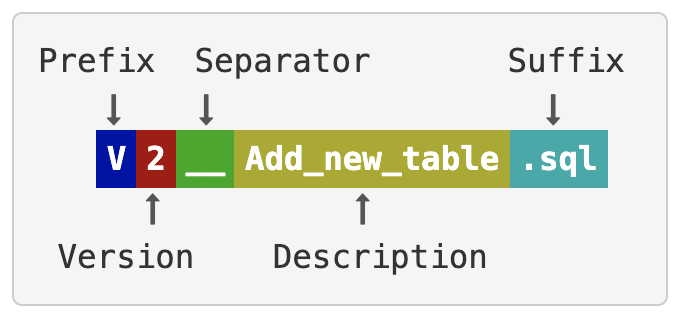
db-schemachange is a simple, lightweight python based tool to manage database objects for Databricks, Snowflake, MySQL, Postgres, SQL Server, and Oracle. It follows an Imperative-style approach to Database Change Management (DCM) and was inspired by the Flyway database migration tool. When combined with a version control system and a CI/CD tool, database changes can be approved and deployed through a pipeline using modern software delivery practices. As such schemachange plays a critical role in enabling Database (or Data) DevOps.

banner image

· 4 min read
Lam Tran

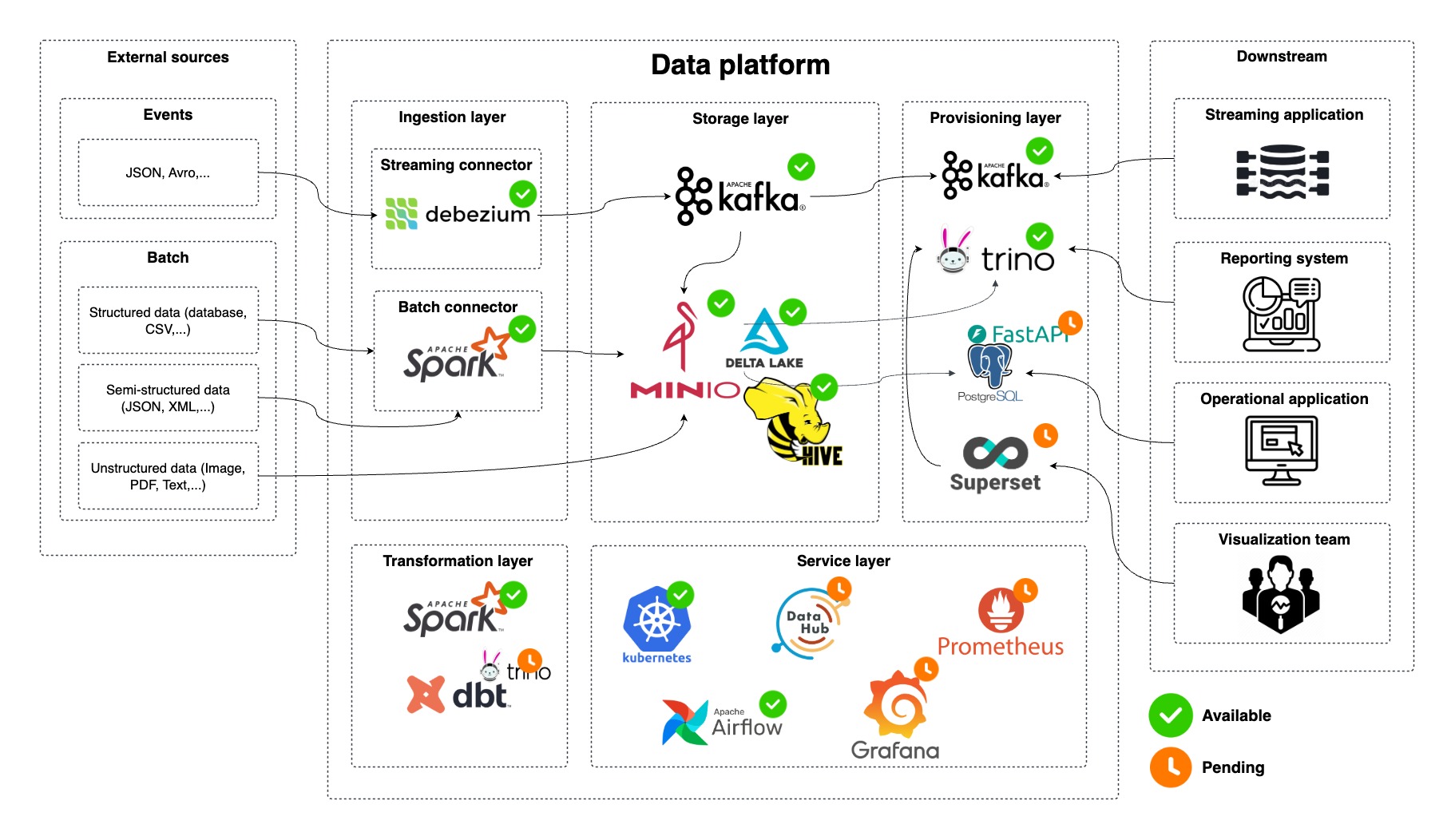
This platform leverages cloud-native technologies to build a flexible and efficient data pipeline. It supports various data ingestion, processing, and storage needs, enabling real-time and batch data analytics. The architecture is designed to handle structured, semi-structured, and unstructured data from diverse external sources.

banner image

· 7 min read
Lam Tran

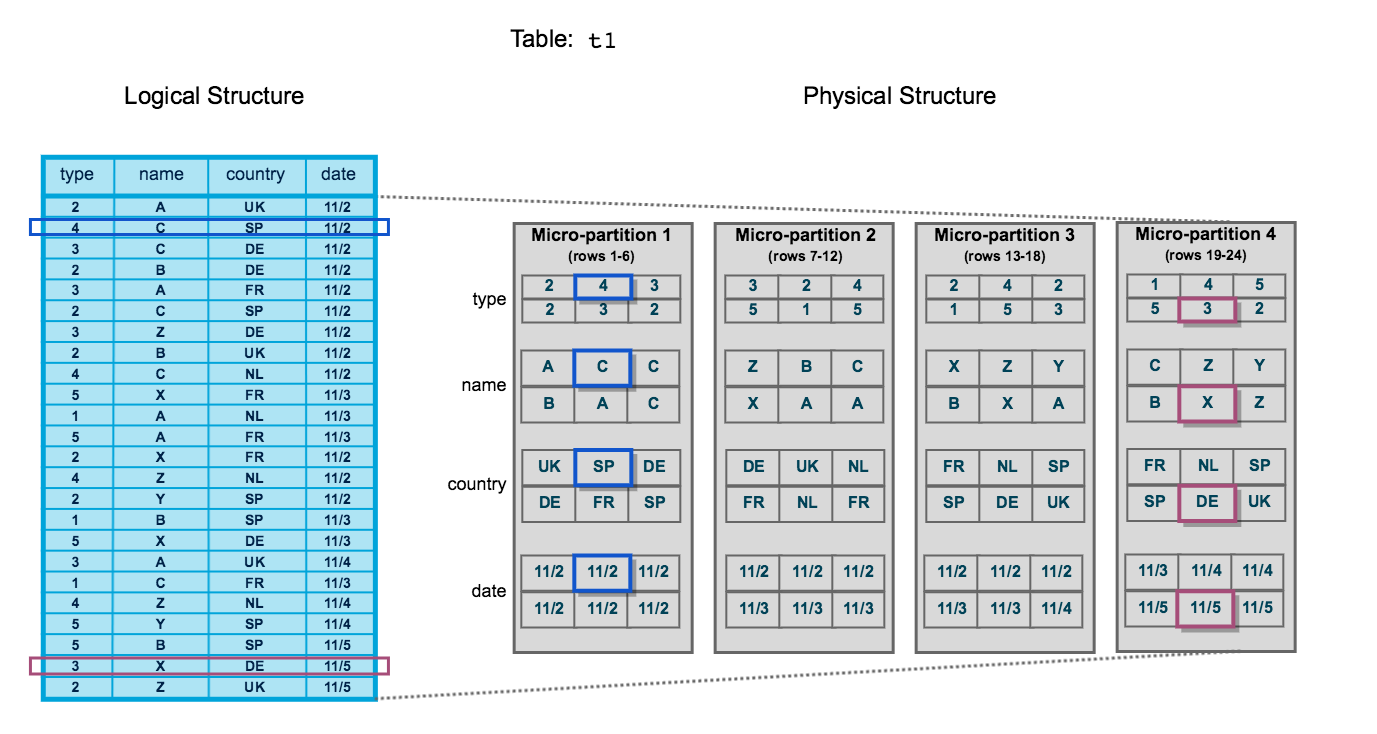
Snowflake is one of the most popular data warehouse solutions nowaday because of the various features that it can provide you to build a complete data platform. Understanding the Snowflake storage layer not only helps us to have a deep dive into how it organizes the data under the hood but it is also crucial for performance optimization of your queries.

banner image

· 7 min read
Lam Tran

I have participated in fews technical interviews and have discussed with people topics around data engineering and things they have done in the past. Most of them are familiar with Apache Spark, obviously, one of the most adopted frameworks for big data processing. What I have been asked and what I often ask them is simple concepts around RDD, Dataframe, and Dataset and the differences between them. It sounds quite fundamental, right? Not really. If we have more closer look at them, there are lots of interesting things that can help us understand and choose which is the best suited for our project.

banner image